How to Extend My Dog's Lifespan: A Rehab Vet's Priority List
Medically reviewed by Mitch McKee, DVM, MSTCVM, MSIVM-C, CCRV, CVMMP, CVA, CTPEP, CTCVMP, CVTP, CVFT, CVCH — For general education — not a substitute for veterinary care.
Extending your dog's lifespan comes down to a short list of habits that work — lean body condition and daily movement lead it.

On this page
I once treated a nine-year-old Border Collie mix named Scout who came in because her owner had noticed, over about four months, that she was hesitating before jumping into the car. Scout weighed 41 pounds on a frame that should have carried maybe 34. Her owner wasn’t neglecting her — she was feeding a normal-sized scoop of kibble twice a day and taking her on a fifteen-minute walk most evenings. That was the whole problem. Nothing dramatic, nothing acute, just years of a small daily surplus and a slightly-too-short walk, compounding. We didn’t start Scout on anything exotic. We started with a stricter feeding measurement, a rehab-guided walking program that built from fifteen minutes to forty over eight weeks, and Tui-na work over her lumbar and hip muscles to keep her comfortable while she reconditioned. Eighteen months later she was clearing the tailgate again.
The verdict up front: if you want to extend your dog’s lifespan, the two interventions with the strongest evidence behind them are keeping your dog lean and keeping your dog moving — everything else, supplements included, is a secondary layer on top of that foundation, not a substitute for it.
What actually moved the needle in the research
The single best piece of evidence we have on canine lifespan isn’t about a supplement at all. It’s a 14-year controlled study of 48 Labrador Retrievers, where half the dogs were fed 25% less than their full-fed littermates and kept at a lean body condition for life. According to the Purina Institute, the lean-fed dogs lived a median of 1.8 years longer — a 15% increase — and by age 8, only 10% of them had osteoarthritis in two or more joints, versus 77% of the control-fed dogs. Hip dysplasia was cut roughly in half by age 2 in the lean group as well.
I think about that study constantly in practice, because it’s rare to find a single, controllable variable that reliably buys a dog nearly two extra years. Most of what I can offer as a rehab clinician — acupuncture, manual therapy, a conditioning plan — is working to preserve function and comfort within whatever lifespan a dog already has. Body condition is one of the few levers that changes the length of that timeline itself.
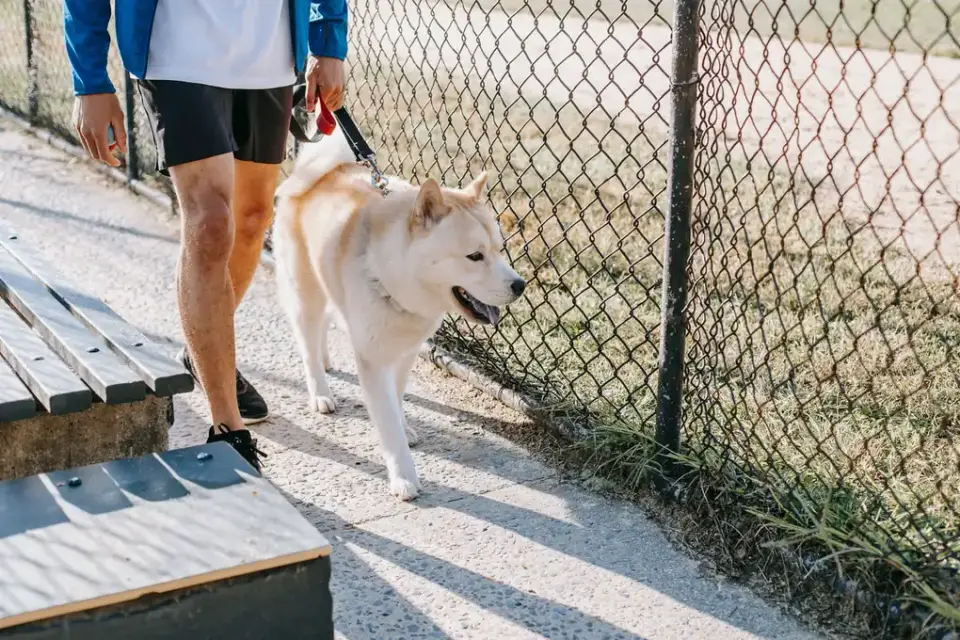
Movement is the second lever, and it’s harder to isolate in controlled trials because it’s tangled up with obesity risk, but the association is consistent. Research summarized in Scientific Reports found that activity patterns in aged dogs are associated with fractional lifespan, memory performance, and gait speed — dogs that stayed more active tended to be further from the end of their expected lifespan relative to their age, not just feeling better along the way. Low activity levels are also a known driver of the obesity that the Purina study shows shortening life directly.
The counterargument, and why I don’t land there
The pushback I hear most from owners, understandably, is that supplements feel more actionable than “feed less and walk more.” A bottle of chews is a discrete purchase with a clear daily task; recalibrating a dog’s diet and building a walking program is an ongoing behavioral project with no finish line. I don’t dismiss that. Adherence matters, and a supplement that’s easy to give consistently has real value precisely because it’s easy. But I won’t rank a supplement above body condition and movement, because the evidence doesn’t support it — the lifespan-extension data on caloric restriction and lean body condition is a controlled, multi-year trial with a measured survival benefit, and nothing in the longevity-supplement category has evidence at that tier yet. Cellular-health ingredients are worth understanding and, in the right dog, worth adding. They are not worth using as a reason to skip the walk.
Where cellular-support ingredients fit, honestly
Once body condition and activity are handled, a few ingredients have legitimate, if more modest, research behind them for cellular aging support. Nicotinamide riboside is an NAD+ precursor; NAD+ itself is required by hundreds of enzymes involved in cellular energy metabolism, and the NIH Office of Dietary Supplements notes that more enzymes depend on NAD-derived coenzymes than on any other vitamin-derived cofactor, though NR remains an investigational precursor without an established intake recommendation. In dog-specific formulations, nicotinamide riboside dosed at 120 mg per two-chew serving is marketed as supporting normal cellular function. Quercetin is a flavonoid studied for antioxidant, immune, and cellular support properties; in laboratory work published via DOI.3390/ph19040525, quercetin formulations at tested concentrations didn’t disrupt normal feeding behavior in the model organism studied, which is a modest but relevant safety-adjacent finding rather than a lifespan claim. Resveratrol is another antioxidant studied for cellular health, though embryonic-exposure research in DOI.1016/j.phymed.2026.158531 found that a 50 μg/ml dose accelerated developmental timing but shortened adult lifespan in the model studied — a reminder that dose and life stage matter and that these compounds aren’t universally protective at every level.
For our deeper dive on which cellular-support formulas hold up and how they’re dosed, see our longevity supplement roundup and our NAD+ supplement comparison. If cognitive decline rather than physical aging is the concern in your house, our cognitive dysfunction supplement guide covers that ground separately, since the ingredient list and evidence base diverge from general longevity support.
I want to be direct about what an owner-reported survey can and can’t tell you here. A Boops Pets owner survey from March 2025, covering 193 dogs, found that 97.8% of owners reported a visible improvement after the first jar, with 94% reporting improved cognitive function and 98% reporting improved energy. That’s an owner-perception data point, not a controlled trial, and I’d weigh it accordingly — it tells you what owners noticed, not what a placebo-controlled study would show.
A short story about what “quality of life” actually buys you
One of the dogs I saw longest in my rehab practice was a twelve-year-old Labrador named Otis, brought in by an owner who’d been told at another clinic that Otis’s slowing-down was “just old age” and there wasn’t much to do about it. Otis was overweight, at 96 pounds on a frame built for something closer to 78, and he’d stopped taking the stairs to the bedroom about six months earlier, sleeping downstairs instead. His owner was weighing whether it was even worth putting him through a weight-loss and conditioning plan at his age, versus just keeping him comfortable. We agreed on a measured plan: a calorie-controlled diet, twice-weekly underwater treadmill sessions, and acupuncture for the discomfort that was making him reluctant to move in the first place. It wasn’t fast. Over about five months Otis lost fourteen pounds and the stairs came back into his routine. I can’t tell you that plan added years to his life in any measurable sense — I don’t have a controlled study on Otis specifically — but I can tell you his last two years looked like a dog living in his own house again, not one confined to a downstairs corner of it. That, to me, is the honest promise of this work: not a guaranteed number of extra years, but a real shot at more comfortable ones, and often more of them.
If your own dog is starting to show hesitation on stairs, on the couch, or after rest, that’s worth a look before it becomes a bigger problem — our hind leg weakness checklist walks through what those early signs can mean and when they warrant a veterinary visit rather than a wait-and-see approach.
What to actually prioritize, in order
- Get an honest body condition score from your vet, not just a number on a home scale, and adjust food accordingly if your dog is running heavy.
- Build a consistent daily movement routine sized to your dog’s current fitness, not their puppy-era fitness — start where they are and progress gradually.
- Address pain or mobility limits early with your vet or a rehab specialist, since discomfort is often why activity drops off in the first place.
- Layer in a cellular-support supplement if you want to, understanding it’s a secondary tool, and confirm dosing and sourcing before adding anything new.
- Track function, not just weight: stairs, jumping onto furniture, gait after rest, sleep quality, and coat condition all tell you more than a single number does.
None of this requires perfection. It requires the boring, repeatable stuff done consistently for years, which is a harder sell than a bottle but a better bet for the dog in front of you.
Frequently asked questions
What single change extends a dog's life the most?
Keeping a dog at a lean, ideal body condition has the strongest controlled evidence behind it, associated with a median 1.8-year longer lifespan in a 14-year Labrador study from the Purina Institute.
Do longevity supplements actually extend a dog's lifespan?
Ingredients like nicotinamide riboside, quercetin, and resveratrol are studied for cellular and antioxidant support, but none has controlled lifespan-extension data in dogs comparable to the evidence behind lean body condition and regular activity.
How much exercise does a senior dog need for healthy aging?
There's no single universal number, but activity level in aged dogs is associated with fractional lifespan, memory, and gait speed, so consistent, dog-appropriate movement matters more than any specific duration.
Sources
- 14-Year Life Span Study in Dogs — Purina Institute
- Activity patterns are associated with fractional lifespan, memory, and gait speed in aged dogs — Scientific Reports
- Niacin - Health Professional Fact Sheet — NIH Office of Dietary Supplements
- Quercetin, NAC, and ascorbic acid feeding-behavior study — DOI:10.3390/ph19040525
- Embryonic resveratrol exposure and lifespan study — DOI:10.1016/j.phymed.2026.158531